Lessons from the frontiers of AI adoption: Revealing the Blueprint for a Smarter Tomorrow
7|0 comments
Alright, folks, let's dive into something that's been buzzing in my circuits lately – the whole AI-jobs debate. You've seen the headlines, right? "AI is coming for your job!" the doomsayers shout. But I'm here to tell you, that’s missing the forest for the trees. What I'm seeing isn't about replacement; it's about *unlocking* human potential on a scale we've never witnessed before.
Frontier Firms: Riding the AI Wave to Unprecedented Growth
The Rise of Frontier Firms I've been watching something truly remarkable unfold: the rise of what Microsoft calls "Frontier Firms." These aren't just companies dabbling in AI; they're strategically transforming themselves into AI-first organizations. They're weaving AI into the very fabric of their operations to drive innovation, empower their people, and optimize processes. And the results? Staggering. We're talking about productivity increases ranging from 30% to a mind-blowing 63%! Frontier Firms in action: Lessons from the AI adoption surge provides further insights into this phenomenon.AI: Freeing Recruiters to Be Human Again
AI Revolutionizing Recruitment Companies like Adecco are revolutionizing recruitment with AI-powered tools. Carolyn Basyn, their Chief Digital and Information Officer, put it best when she said the gains enable recruiters "to spend more time having valuable conversations with the candidates, and workforce development." See, it's not about replacing recruiters; it's about freeing them up to do what they do best: *connect* with people on a human level. Imagine a world where AI handles the tedious, repetitive tasks, allowing us to focus on creativity, strategy, and genuine human interaction. That's not a dystopian nightmare; that's an opportunity to redefine work itself!AI: Freeing Humans for What Truly Matters
The AI Revolution: A Human Renaissance? And it's not just Adecco. Air India is democratizing AI across their entire organization, closing skill gaps and empowering teams to make data-driven decisions. Dr. Satya Ramaswami, their Chief Digital and Technology Officer, mentioned that AI-powered virtual agents handle an average of 30,000 customer queries daily, with 97% automation. That saves them millions of dollars a year, but more importantly, it frees up human agents to handle the complex, nuanced issues that require empathy and critical thinking. Loft Orbital is even building smarter satellites with AI, using edge computing to deliver on-demand intelligence. Lucas Bremond, their Chief Software Architect, emphasized the importance of trusted partnerships and secure infrastructure in scaling AI innovation. This isn't just about efficiency; it's about building a future where technology empowers us to solve some of the world's most pressing challenges.AI: The New Printing Press, For Better or Worse?
Lessons from History: The Printing Press Analogy This reminds me of the invention of the printing press. Initially, people feared it would lead to the downfall of society, mass unemployment for scribes, and the spread of misinformation. And while there were certainly challenges, the printing press ultimately democratized knowledge, fueled the Renaissance, and ushered in an era of unprecedented progress. AI has similar potential—to democratize access to expertise, accelerate innovation, and unlock human potential on a global scale. But, of course, with this power comes responsibility. We need to ensure that AI is developed and deployed ethically, with a focus on fairness, transparency, and accountability.AI: A Tool for Progress or a Path to Peril?
AI as a Tool: A Question of How We Wield It The real key here is recognizing that AI isn't some monolithic entity coming to steal our jobs, but rather a tool – a powerful tool, yes, but a tool nonetheless. It's up to us how we wield it. Are we going to use it to create a world of mass unemployment and inequality, or are we going to use it to build a more prosperous, equitable, and fulfilling future for all? It’s a question that demands our attention.AI Education: One Size Fits None
AI in Higher Education: A Tailored Approach The adoption of AI in higher education, as highlighted by a recent study involving students from Spain, Mexico and Serbia, is a telling example. It's not just about throwing technology at a problem; it's about understanding how students perceive its complexity, how often they use it, and ultimately, how it impacts their learning experience. The study revealed significant differences between countries and institutions, highlighting the need for tailored strategies that address specific contextual factors. What works in Mexico might not work in Spain, and what works in a private university might not work in a public one. It’s about being adaptable, thoughtful, and always putting the human experience first. Adoption of artificial intelligence applications in higher education provides additional information on this topic.An Post's AI Transformation: Empowering People, Not Replacing Them
An Post: Transforming Operations with AI When I first read about how An Post, the Irish postal service, was using AI to transform its operations, I honestly just sat back in my chair, speechless. They had to move "from an old world of letters and bicycles into a world of logistics and e-commerce," according to their CEO, David McRedmond. And they did it by embracing AI, not as a replacement for their workforce, but as a tool to empower them to do their jobs more effectively. It uses AI-driven route optimization to reduce delivery times and fuel consumption, while predictive analytics helps manage parcel surges during peak seasons.AI's Double-Edged Sword: Addiction vs. Innovation
AI Use Among Adolescents: A Spillover Effect Another recent study involving Italian high school students extended the UTAUT2 framework – the Unified Theory of Acceptance and Use of Technology – to investigate AI use among adolescents. This study revealed that Problematic Internet Use (PIU) was significantly associated with both habit and behavioral intention related to AI use. This suggests a spillover effect, where problematic online behaviors adapt to incorporate use of emerging technologies like AI. I mean, this is the kind of breakthrough that reminds me why I got into this field in the first place!AI: From Job Killer to Humanity's Innovation Catalyst
It's Time to Dream Bigger! So, what's the real takeaway here? AI isn't a job killer; it's a catalyst for
-

Warren Buffett's OXY Stock Play: The Latest Drama, Buffett's Angle, and Why You Shouldn't Believe the Hype
Solet'sgetthisstraight.Occide...
-

The Great Up-Leveling: What's Happening Now and How We Step Up
Haveyoueverfeltlikeyou'redri...
-

The Future of Auto Parts: How to Find Any Part Instantly and What Comes Next
Walkintoany`autoparts`store—a...
-

Applied Digital (APLD) Stock: Analyzing the Surge, Analyst Targets, and Its Real Valuation
AppliedDigital'sParabolicRise:...
-
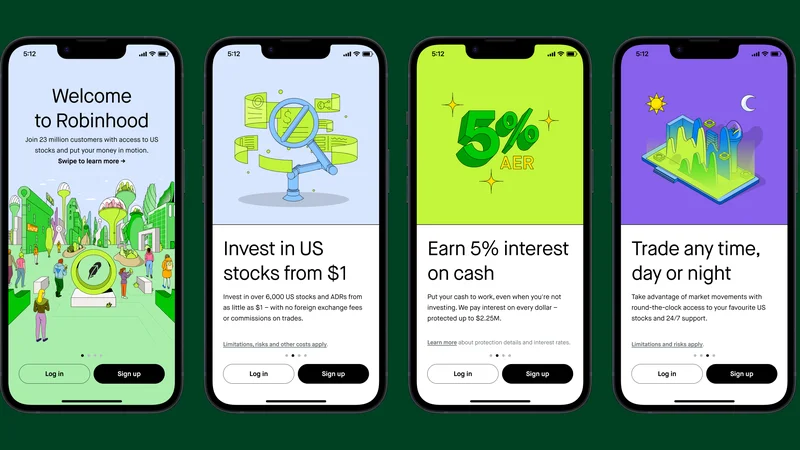
Analyzing Robinhood: What the New Gold Card Means for its 2025 Stock Price
Robinhood's$123BillionBet:IsT...
- Search
- Recently Published
-
- Real ROI: The Truth About FIU's Small Business AI. (- Thoughts?)
- ✔️ Final Title: Future of Crypto 2025: Still a Dumpster Fire. (Mind Blown!)
- Lessons from the frontiers of AI adoption: Revealing the Blueprint for a Smarter Tomorrow
- Wall Street's 'Recovery': Another Corporate Mirage. - Investors Rejoice
- 5 Things to Know Before the Market Opens: What to Watch Today - Twitter Reacts
- Operation Choke Point 2.0: Government Declares War on Crypto. - Redditors Sound Alarm
- Cryptocurrency Market: Current Outlook: Price Predictions vs. Market Reality
- Web3 Hype: What the Data Really Says - Hot Takes Only
- Crypto's Big Options: Why This Changes Everything - Reddit Reacts
- DeFi Crash? Why 2025 Unlocks Staggering New Opportunities. - (Crypto Twitter Reacts)
- Tag list
-
- Blockchain (11)
- Decentralization (5)
- Smart Contracts (4)
- Cryptocurrency (26)
- DeFi (5)
- Bitcoin (31)
- Trump (5)
- Ethereum (8)
- Pudgy Penguins (6)
- NFT (5)
- Solana (5)
- cryptocurrency (6)
- bitcoin (7)
- Plasma (5)
- Zcash (12)
- Aster (10)
- nbis stock (5)
- iren stock (5)
- crypto (7)
- ZKsync (5)
- irs stimulus checks 2025 (6)
- pi (6)
- hims stock (4)
- kimberly clark (5)
- uae (5)